A floor can look excellent on installation day and still be the wrong choice for the way a household lives. When homeowners ask about the best durable flooring for remodel projects, the answer depends on where it will be installed, how the room is used, and how much maintenance the household is willing to take on. In North Dallas, heat, humidity, active family life, pets, and the occasional plumbing issue all deserve a place in that decision.
Durability is more than scratch resistance. A durable floor should stand up to daily traffic, tolerate moisture where needed, remain stable through seasonal changes, and continue to support the overall value and appearance of the home. The right material is one that fits the room and the expectations for the remodel, not simply the one with the highest durability rating on a sample board.
Start With How the Room Will Be Used
A kitchen, bathroom, entryway, and upstairs bedroom should not all be evaluated by the same standard. Kitchens need surfaces that handle dropped cookware, frequent cleaning, and spills. Bathrooms need dependable moisture resistance. Living areas often call for a balance of comfort, visual continuity, and wear resistance, while rental properties may require materials that are easy to replace and maintain between tenants.
Before selecting a floor, consider the people and routines that will use it. Large dogs, young children, pool traffic, rolling office chairs, and frequent entertaining change what “durable” means in practical terms. A quiet guest room can support materials that would be a poor fit for a busy family kitchen.
Subfloor condition also matters. An uneven slab, old flooring transitions, or existing moisture concerns can affect both the material choice and the installation plan. Addressing those issues before new flooring goes in helps prevent movement, gaps, cracked tile, and premature wear later.
Best Durable Flooring for Remodel Projects by Material
Several flooring types perform well in residential remodels, but each has strengths and limitations. A disciplined selection process weighs the benefits against the demands of the space.
Porcelain Tile for Wet Areas and Heavy Traffic
Porcelain tile is one of the most durable choices for bathrooms, laundry rooms, kitchens, and entries. It resists water, scratches, stains, and everyday wear exceptionally well. It also offers wide design flexibility, including stone-look, wood-look, and large-format styles that can make a room feel more tailored.
For North Dallas homeowners, porcelain is particularly practical in bathrooms and areas near exterior doors. It will not swell after a spill, and it is easy to clean. The trade-off is comfort: tile is harder and cooler underfoot than many other materials. Grout lines also require thoughtful selection and proper sealing or maintenance, depending on the grout used.
Tile installation is not a shortcut item. Proper surface preparation, layout, waterproofing in wet areas, and clean transitions all affect the finished result. A well-installed porcelain floor can serve a home for decades, while a poorly prepared installation can crack or loosen far sooner.
Luxury Vinyl Plank for Practical Everyday Performance
Luxury vinyl plank, often called LVP, is a strong candidate for busy households, whole-home updates, and investment properties. Quality products are water-resistant or waterproof, comfortable underfoot, and available in a wide range of wood-look finishes. They are also quieter than tile and generally more forgiving when something is dropped.
The most durable options have a substantial wear layer and a stable core designed for residential temperature changes. Product quality varies considerably, so choosing solely by color or price can create disappointment. A lower-grade plank may show wear, separate at joints, or telegraph imperfections from the subfloor.
LVP is especially useful when a homeowner wants a consistent flooring appearance across living areas, kitchens, hallways, and bedrooms. It is not always the best answer for every space, however. Direct sunlight, extreme heat exposure, and heavy furniture can affect some products. Careful product selection and proper installation are essential, especially near large windows and patio doors.
Engineered Hardwood for Long-Term Character
Engineered hardwood brings genuine wood character to a remodel while offering more dimensional stability than traditional solid hardwood. It is a natural fit for living rooms, dining rooms, bedrooms, and hallways where homeowners want warmth and lasting appeal.
Its durability depends on the thickness of the hardwood veneer, the quality of the core, the finish, and how the space is maintained. A higher-quality engineered wood floor can often be refinished, extending its useful life. That makes it a compelling long-term choice for homeowners who value authentic materials and do not want a floor that feels temporary.
Wood is not the most forgiving option for bathrooms or rooms with frequent standing water. It can also scratch, dent, and change color over time. For many homeowners, that natural aging is part of its appeal. For others, especially those with large pets or high-traffic kitchens, a wood-look porcelain or premium LVP may better match the desired level of maintenance.
Natural Stone for High-End, Permanent Spaces
Natural stone can deliver a distinctive, enduring finish in entries, bathrooms, and select kitchen designs. Marble, travertine, limestone, and slate each have a different visual character and care requirement. Stone adds real material value and a sense of permanence that manufactured products cannot fully duplicate.
It also requires informed expectations. Some stones are porous, can stain or etch, and need periodic sealing. Honed finishes may be more forgiving than polished surfaces, particularly in active homes. Stone is best selected by homeowners who appreciate variation and are comfortable with maintenance as part of owning a natural product.
Do Not Let Appearance Override Installation Details
The most durable flooring can still fail if it is installed over an unsuitable surface or paired with the wrong transitions, underlayment, or moisture protection. This is particularly relevant in whole-home renovations, where new flooring often needs to meet existing rooms, stairways, cabinetry, and exterior thresholds cleanly.
For tile, the substrate must be stable enough to prevent cracking. For plank flooring, the subfloor must be level within the product manufacturer’s tolerance. For wood, the installation method and acclimation process must suit the material and site conditions. These details may not be visible once a project is complete, but they directly influence how the floor performs over time.
A remodel should also account for floor height early. Adding tile over a prepared surface or installing a thicker engineered hardwood can change door clearances and transitions into adjacent rooms. Planning these items before demolition protects the schedule and avoids last-minute compromises.
Choose a Finish That Works With Real Life
Color and sheen have a practical impact on maintenance. Very dark floors can reveal dust, pet hair, and fine scratches. Very light floors can make dirt around exterior entries more noticeable. Smooth, high-gloss surfaces show marks more readily than low-sheen or textured finishes.
For active homes, a medium-tone floor with natural variation is often the most forgiving choice. Matte or low-luster finishes tend to hide everyday wear better than glossy ones. In wood-look materials, subtle grain variation can be attractive while also making small scuffs less obvious.
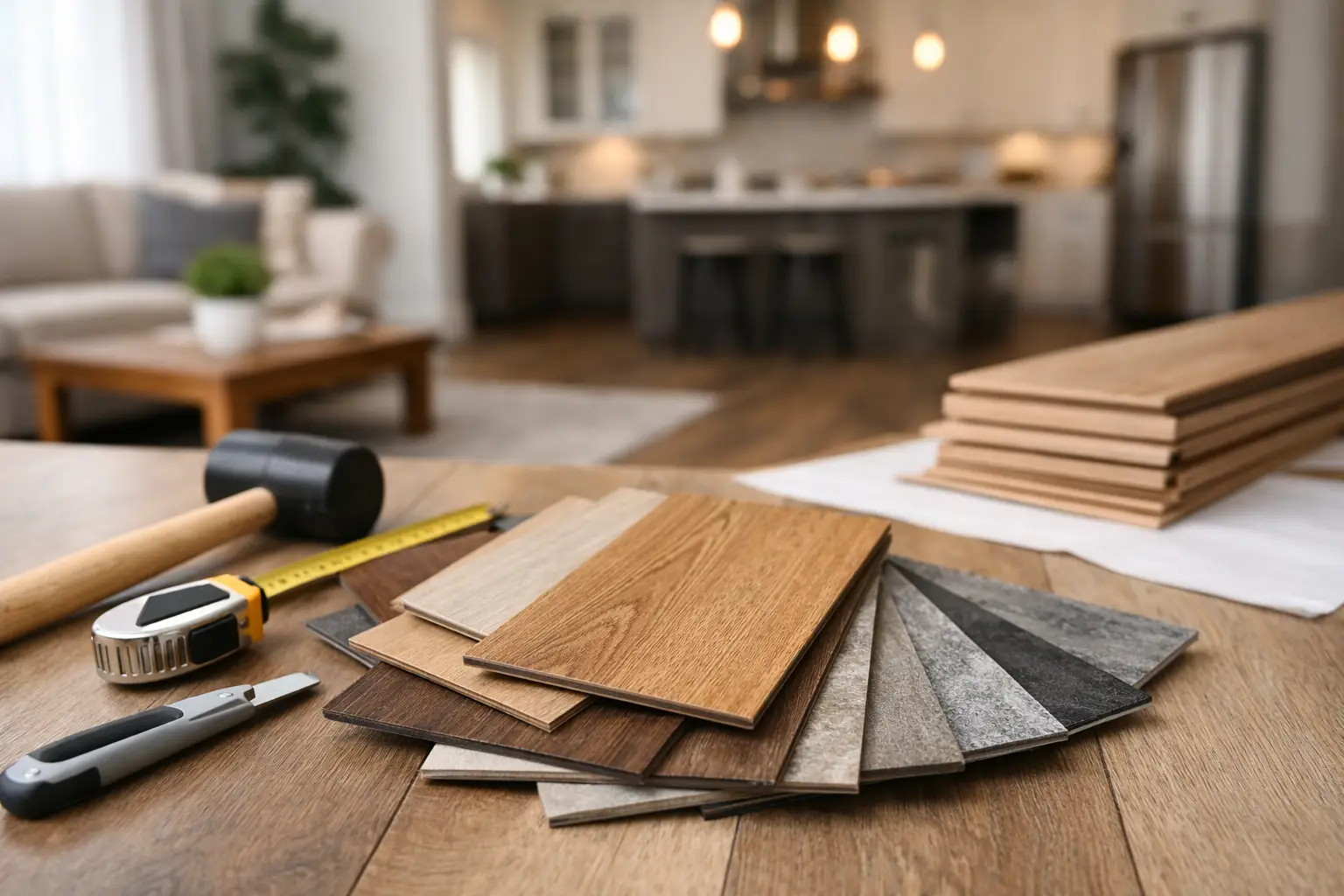
This is where a full-room perspective helps. Flooring should work with cabinet color, wall paint, natural light, and the flow between rooms. A small sample can look different once it is placed beside existing finishes or under the home’s lighting. Reviewing samples in the actual space leads to more confident decisions.
Budget for the Complete Flooring Scope
Material cost is only one part of a flooring budget. Removal of existing floors, subfloor repairs, moisture mitigation, leveling, trim work, transitions, moving furniture, and disposal can all affect the final investment. In bathrooms and kitchens, flooring work may also need to coordinate with cabinetry, plumbing fixtures, appliances, and waterproofing.
A clear scope protects homeowners from comparing incomplete estimates. If one proposal includes proper floor preparation and another does not, the lower number may not reflect the same standard of work. Durable results come from the complete system, not just the visible surface.
At Yeager Properties, flooring decisions are considered within the larger remodeling plan so material selections, schedules, and adjoining finishes are coordinated from the start. That organized approach is especially valuable when a kitchen, bathroom, or several rooms are being renovated together.
The best choice is the one that supports your household now and still feels appropriate years from now. Bring samples into the room, be candid about how the space is used, and give installation preparation the same attention as the finish itself. Those decisions create a floor that remains dependable long after the remodel is complete.