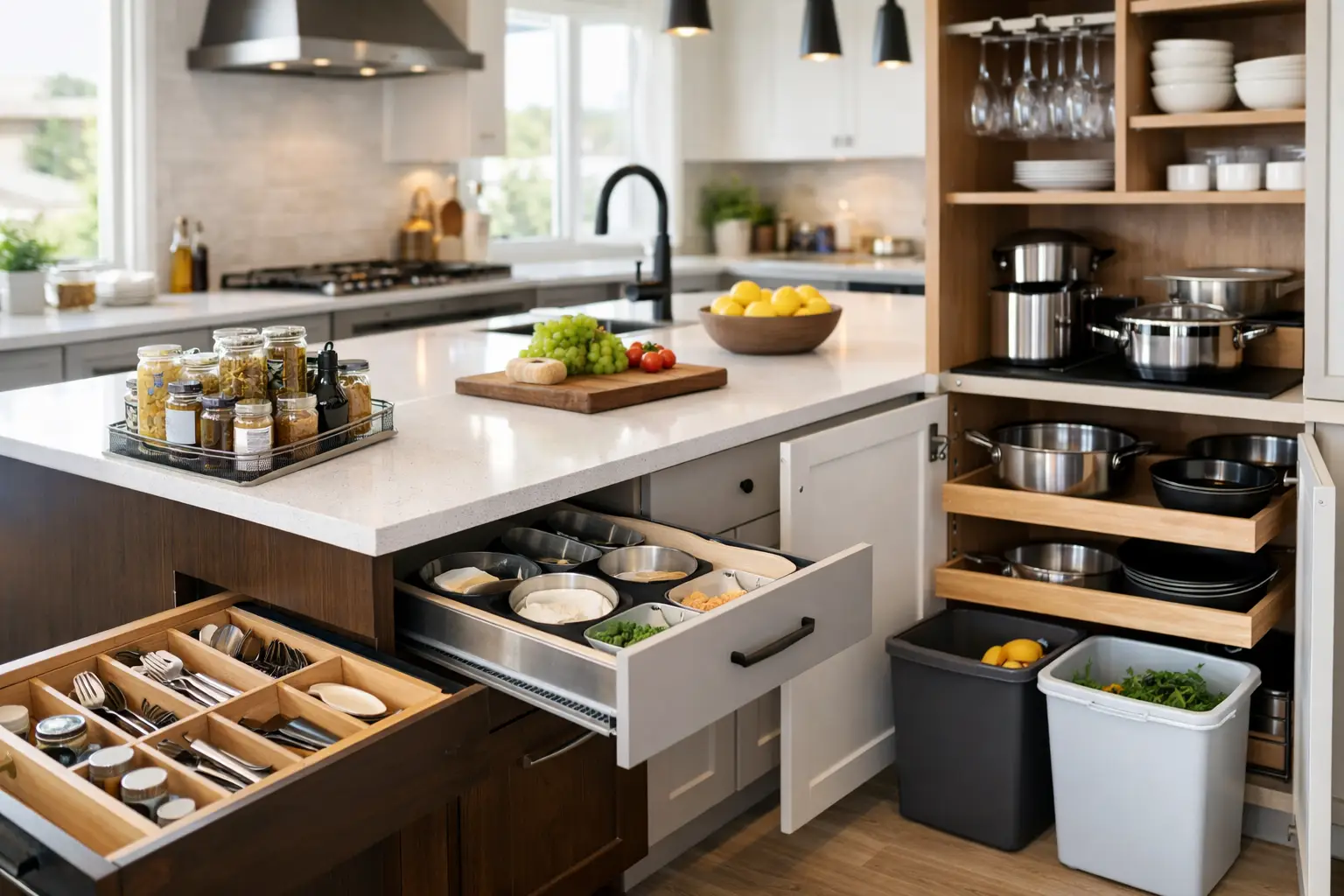
A kitchen can have beautiful cabinets and still feel crowded by countertop appliances, hard-to-reach pans, and pantry items that disappear behind one another. The best kitchen storage upgrades address those daily frustrations at the source, giving every frequently used item a practical, accessible place.
For North Dallas homeowners planning a kitchen remodel, storage should be part of the initial layout conversation, not an afterthought. The right cabinet interiors can make an existing footprint work harder, reduce clutter, and support the way your household actually cooks, entertains, and cleans up.
What the Best Kitchen Storage Upgrades Solve
Storage is not simply about adding more cabinets. It is about making the available space easier to use. A base cabinet with a fixed shelf may technically hold several pots, for example, but a deep drawer lets you see and retrieve them without kneeling or unloading half the cabinet.
Well-planned storage also protects the investment in a remodeled kitchen. When appliances, dishes, food, and cleaning supplies have defined homes, counters stay clearer and cabinet interiors take less daily abuse. Durable drawer boxes, quality slides, and thoughtful organization features create a difference homeowners notice every day.
The best choices depend on the kitchen’s layout and the household’s routines. A family that cooks most nights may prioritize cookware drawers and pantry storage, while a homeowner who entertains often may benefit more from beverage storage and serving-piece cabinets. A professional plan balances capacity with convenient access.
Best Kitchen Storage Upgrades to Plan Into a Remodel
1. Deep drawers for pots, pans, and lids
Deep base drawers are among the most practical upgrades in a kitchen renovation. They replace the awkward reach into a lower cabinet with full-extension access to heavy cookware, mixing bowls, and small appliances. Add an adjustable divider for lids and pans, and the drawer remains orderly rather than becoming a catchall.
These drawers require quality hardware because they carry significant weight. This is one area where durable construction matters more than a low-cost insert or temporary organizer.
2. Drawer banks instead of standard base cabinets
Where possible, consider a stack of drawers in place of a traditional base cabinet. Shallow upper drawers are useful for utensils, wraps, and kitchen tools, while deeper lower drawers can hold dishes, cookware, or food-storage containers.
Not every base cabinet needs this treatment. Sink areas and certain corner configurations require different solutions. Still, replacing even a few fixed-shelf cabinets with drawer banks can make a major improvement in day-to-day function.
3. A dedicated spice drawer or pullout
Spices are easy to collect and difficult to keep visible. A shallow drawer near the cooktop can hold labeled jars in a single layer, making selection faster and reducing duplicate purchases. A narrow vertical pullout also works well when drawer space is limited.
Location matters. Keeping spices close to the cooking zone is convenient, but they should not sit directly next to a heat source that can affect flavor and shelf life.
4. Vertical tray and baking-sheet storage
Baking sheets, cutting boards, cooling racks, and serving trays are better stored upright than stacked. Narrow vertical dividers inside an upper cabinet or a base cabinet near the oven prevent the familiar clatter of pulling one sheet from a pile.
This small detail is especially useful in kitchens where cabinetry must work efficiently without expanding the room. It turns a slim cabinet opening into purposeful storage.
5. Pullout waste and recycling cabinets
A concealed pullout for trash and recycling keeps bins out of sight while placing them where food prep and cleanup happen. The best location is often beside the sink or main prep area, rather than at the far end of the kitchen.
Consider your local collection needs before selecting bin sizes. Some households need two large bins, while others benefit from a smaller third compartment for compostable waste. Building the cabinet around the actual bins prevents a feature that looks good on a plan but falls short in daily use.
6. Rollout shelves in pantry and utility cabinets
Deep pantry cabinets can waste a surprising amount of space when items get pushed to the back. Rollout shelves bring cans, dry goods, and small appliances forward without requiring a full walk-in pantry.
They are also useful for homeowners who want easier access without bending and reaching. Solid shelves with full-extension hardware are usually a better long-term choice than lightweight wire baskets, particularly for heavier pantry staples.
7. A tall pantry with adjustable interiors
A floor-to-ceiling pantry cabinet can create substantial storage in a modest footprint. Adjustable shelves allow the cabinet to change with your needs, from cereal boxes and snacks to countertop appliances and bulk purchases.
The trade-off is that a tall pantry needs careful placement. It can feel visually heavy in a smaller kitchen if it overwhelms the surrounding cabinetry. Integrating it into a cabinet wall or placing it near the refrigerator often creates a more balanced result.
8. Corner cabinet solutions that earn their space
Corners are frequently the least efficient part of a kitchen. A well-designed corner solution, such as a pullout shelf system or a carefully planned angled cabinet, can make that space useful for less frequently used cookware or serving pieces.
Not every corner needs an expensive mechanism. In some layouts, a simple accessible cabinet with rollout shelves provides better value and fewer moving parts. The right choice depends on the cabinet size, budget, and how often the space will be used.
9. A functional sink-base organizer
The cabinet below the sink is often crowded with cleaning products, sponges, and water lines. A pullout organizer designed around plumbing can contain supplies, while a small interior rack keeps towels or spray bottles within reach.
This upgrade requires precise measuring. Plumbing locations, garbage disposals, and water filtration systems all affect what will fit. Planning it during remodeling is far more effective than trying to force a generic organizer into an already finished cabinet.
10. Cabinet storage for food containers
Food-storage containers tend to create clutter because lids and bases separate quickly. A deep drawer with adjustable dividers keeps sets together and makes it easier to see what is available.
Place this storage near the dishwasher if possible. That simple decision shortens the unloading process and helps the kitchen stay organized after busy meals.
11. An appliance garage or dedicated appliance zone
Coffee makers, toasters, blenders, and stand mixers can dominate valuable counter space. An appliance garage with proper clearance and easy access can keep smaller appliances available without leaving them on display. A dedicated cabinet zone with a lift shelf may be a better fit for a heavier mixer.
This feature should be designed around the appliances you own, not a generic list. Consider height, depth, ventilation needs, and whether you want to use the appliance in place or move it to the counter.
12. A beverage station that reduces traffic
A beverage station can keep coffee supplies, glasses, and drinks out of the main cooking area. In a busy household, this reduces congestion during breakfast, gatherings, and weeknight meal preparation.
It does not have to be elaborate. A small cabinet run with drawers, a beverage refrigerator, and upper storage for mugs or glassware can create a highly useful secondary zone. For homeowners who entertain, it can also keep guests comfortably outside the primary work triangle.
Start With How Your Kitchen Is Used
The strongest storage plan begins with an honest inventory. Think about the appliances that live on the counter, the cookware used each week, the items currently stored in another room, and the supplies that tend to pile up. These details reveal which upgrades will provide real value.
It is also worth considering the future. Adjustable shelves, generous drawer capacity, and accessible lower storage can serve a household well as routines change. Features that look impressive but do not match your daily habits may add cost without improving the room.
During a kitchen remodeling consultation, Yeager Properties helps homeowners connect layout decisions to the way they use the space. Clear planning before construction helps avoid compromises later, when cabinet dimensions and utility locations are already set.
A well-organized kitchen should feel calm on an ordinary Tuesday night, not only polished when guests arrive. Choosing storage that supports your real routines is one of the most dependable ways to make a remodel more useful for years to come.