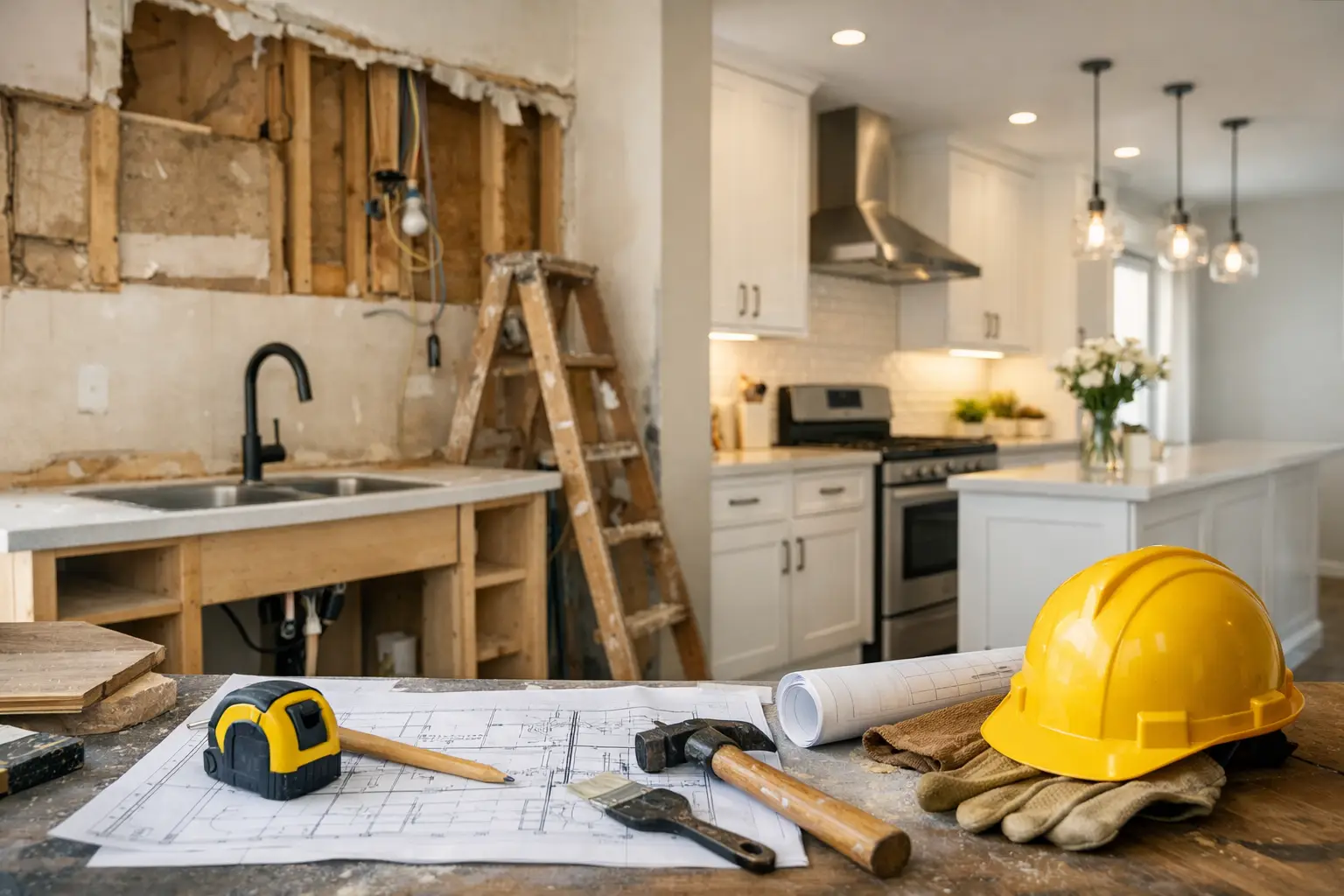
A kitchen that no longer works for the way your family cooks, a bathroom with dated finishes, or a floor plan that feels closed off can make a well-located home feel harder to enjoy than it should. If you have been asking what is home remodeling, the simplest answer is that it is the process of changing part of a home to improve how it looks, functions, or performs over time.
Home remodeling can be as focused as updating one bathroom or as extensive as reworking multiple rooms in a whole-home project. The goal is not just to replace old materials. A well-managed remodel improves daily use, supports your lifestyle, and protects the long-term value of the property.
What Is Home Remodeling?
Home remodeling means altering an existing space rather than simply decorating it. That can include changing layouts, replacing cabinets, updating plumbing fixtures, installing new flooring, improving lighting, or rebuilding parts of a room so it works better than before.
In practical terms, remodeling often involves construction. Walls may move. Electrical systems may need updates. Storage can be reconfigured. Finishes are selected not only for appearance, but also for durability and maintenance. The work is more involved than cosmetic changes because it affects how the home is built and used.
That is why remodeling is usually planned around three core outcomes: better function, stronger visual appeal, and improved resale potential. Some homeowners care most about one of those goals, but the best projects usually balance all three.
Home Remodeling vs. Renovation
People often use remodeling and renovation interchangeably, and in everyday conversation that is understandable. Still, there is a useful distinction.
Renovation generally means restoring or refreshing a space without significantly changing its structure or layout. Think new paint, updated tile, replacement countertops, or new fixtures in the same general footprint.
Remodeling usually goes further. It changes the design, use, or arrangement of the space. Expanding a shower, removing a wall between the kitchen and living area, adding an island, or converting a formal dining room into a home office are remodeling decisions.
The difference matters because the level of planning, budget control, scheduling, and trade coordination tends to increase when a project moves from surface updates to structural or layout changes. For homeowners in established North Dallas neighborhoods, that distinction often shapes both cost and timeline.
What Home Remodeling Can Include
Most remodeling projects fall into a few common categories. Kitchen remodeling is one of the most requested because kitchens carry so much of the daily workload in a home. Better storage, improved workflow, stronger lighting, and more durable surfaces can change how the entire house feels.
Bathroom remodeling is another high-impact area. A bathroom does not need to be large to benefit from a smarter layout, more efficient storage, updated plumbing fixtures, and finishes that stand up to moisture and daily use.
Whole-home remodeling brings multiple priorities together. These projects can include flooring, lighting, paint, trim, kitchen and bath updates, layout changes, and coordinated finish selections across the house. They require more planning, but they can also create the most cohesive result.
Other remodels may focus on living rooms, laundry rooms, primary suites, home offices, stairways, or aging-in-place upgrades. In every case, the scope depends on what the home needs and how the owner wants to live in it.
Why Homeowners Choose to Remodel
Most people do not remodel just because something is old. They remodel because the home is no longer supporting their routine, preferences, or future plans.
Sometimes the issue is function. A cramped kitchen, limited storage, poor lighting, or an awkward bathroom layout can create daily frustration. In other cases, the finishes may be worn, dated, or difficult to maintain. For investors and resale-minded owners, remodeling can also be a strategic way to improve marketability and protect equity.
There is also a lifestyle factor. Families change. Work-from-home needs change. Entertaining habits change. A home that worked ten years ago may need a very different layout today. Remodeling gives homeowners a way to adapt without leaving a neighborhood they already value.
What Makes a Remodeling Project Successful
A successful remodel starts well before construction begins. Good results usually come from a clear scope, realistic budget, organized scheduling, and strong communication from the beginning.
Scope clarity matters because vague expectations create avoidable problems. If a homeowner says they want a better kitchen, that can mean many different things. More storage, easier traffic flow, upgraded appliances, and a cleaner design are all different goals. The project moves more smoothly when those priorities are defined early.
Budget discipline matters just as much. Remodeling costs are shaped by labor, materials, structural changes, product selections, and the age of the home. It is possible to create a beautiful result at different investment levels, but the plan has to match the budget. If not, delays and mid-project changes become much more likely.
Execution also matters. Even a strong design can fall short if the job site is poorly managed, trades are not coordinated, or finish quality is inconsistent. Homeowners usually feel the difference right away when a remodeling company communicates clearly, keeps the site organized, and stays accountable to the agreed timeline.
The Real Trade-Offs in Home Remodeling
Remodeling has real benefits, but it also comes with decisions that deserve honest attention.
The first is cost versus scope. Expanding a project often improves the final result, especially when several connected spaces need attention. At the same time, adding square footage changes, custom features, or premium materials can move the investment quickly. It helps to separate must-haves from nice-to-haves before construction starts.
The second is speed versus customization. Faster decisions and readily available materials can help maintain the schedule. Highly customized work, specialty finishes, and frequent design changes may improve the final look, but they usually require more time.
The third is short-term disruption versus long-term value. Living through a kitchen or whole-home remodel can be inconvenient. Noise, temporary work areas, and limited room access are part of the process. For many homeowners, the outcome is worth it, but the process is much easier when expectations are realistic and the project is professionally managed.
How to Know If Your Home Needs Remodeling
A home usually tells you when it is ready for more than simple updates. If the layout works against your daily routine, storage is constantly lacking, materials are wearing out, or multiple rooms feel disconnected in style and function, remodeling may be the better path.
Another sign is when repeated repairs stop making financial sense. Replacing isolated pieces in an outdated room can feel cheaper in the moment, but it often adds up without solving the underlying problems. A coordinated remodel may be the smarter long-term investment.
It is also worth looking at how long you plan to stay. If this is your long-term home, remodeling can improve comfort and usability in a meaningful way. If you may sell in the near future, the focus may shift toward updates that support resale without overbuilding for the neighborhood.
What to Expect During the Process
Most remodeling projects follow a similar path. It begins with defining goals, identifying the project scope, and reviewing the existing space. From there, budget ranges, design direction, material selections, and scheduling are organized before work begins.
Once construction starts, progress depends on coordination. Demolition, rough mechanical work, framing changes, inspections when required, finish installation, and punch-list completion all need to happen in the right sequence. This is where project management has a major effect on the client experience.
The smoothest projects are not necessarily the smallest. They are the ones led with clear expectations, steady communication, and attention to detail. That is why many homeowners choose a firm like Yeager Properties, where craftsmanship and process are treated with the same level of seriousness.
Why the Definition Matters
Understanding what is home remodeling helps you make better decisions before you commit to a project. It clarifies whether you need surface-level updates or a more thoughtful reworking of the space. It also helps you evaluate contractors based on more than price alone.
A remodel is not just about new finishes. It is about improving the way your home supports everyday life. When the scope is clearly defined and the work is managed with care, the result is more than a visual upgrade. It is a home that feels more functional, more durable, and more aligned with the way you want to live.
If you are considering changes to your home, start by looking past individual materials and asking a better question: what would make this space work well for the next ten years?