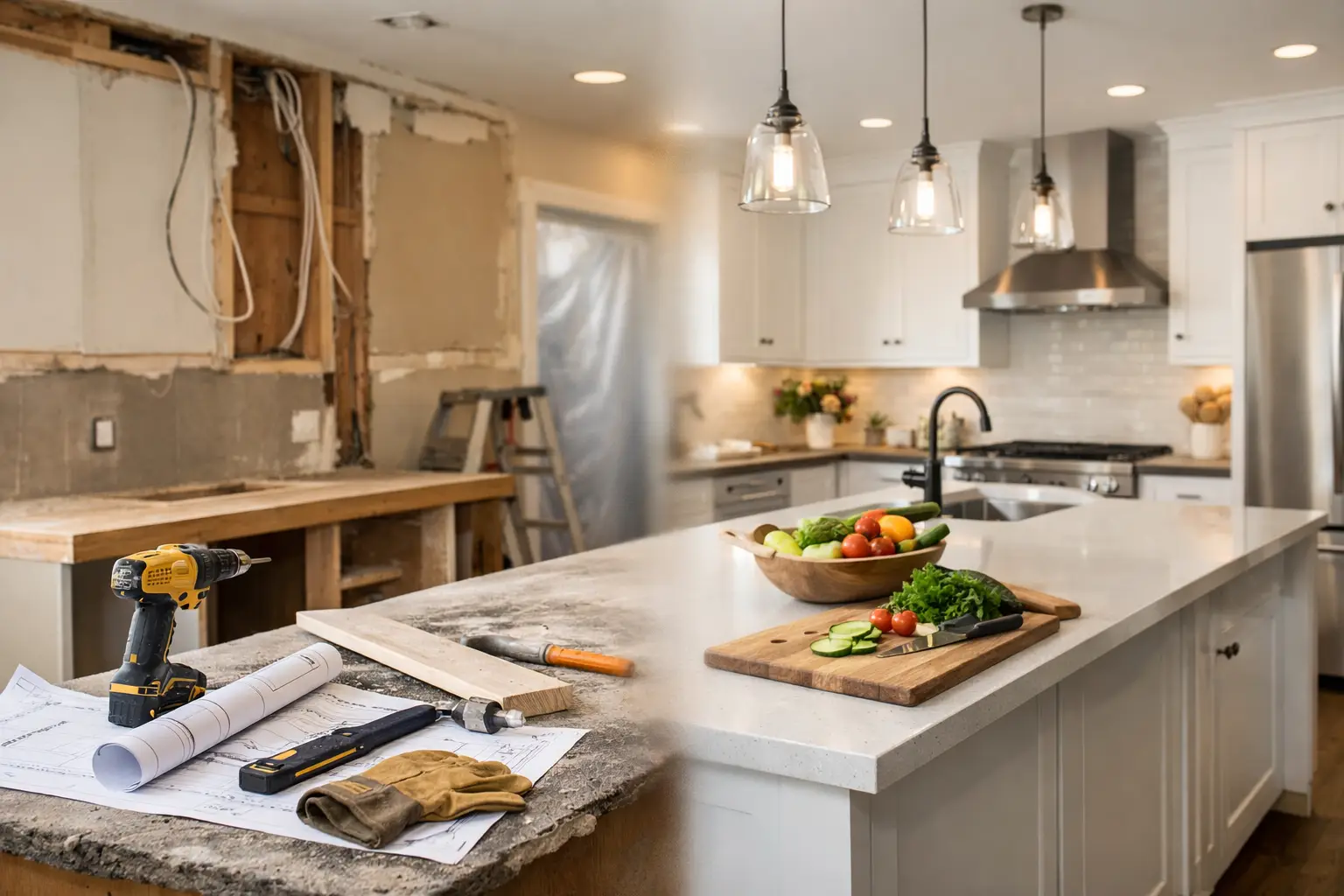
Most homeowners ask what is kitchen remodeling when they are really asking a more practical question: what changes are actually worth making in one of the busiest rooms in the house? A kitchen remodel is not just about new cabinets or updated finishes. It is the process of improving how the space works, how it looks, and how well it holds up to daily life.
That definition matters because kitchens carry more pressure than almost any other room. They have to support cooking, storage, traffic flow, cleaning, family routines, and often entertaining. When a kitchen stops meeting those needs, remodeling becomes less of a cosmetic project and more of a functional upgrade.
What is kitchen remodeling?
Kitchen remodeling is the planned renovation of a kitchen to improve layout, storage, finishes, fixtures, appliances, and overall usability. Some projects focus on surface-level updates, such as replacing countertops, cabinet fronts, flooring, or lighting. Others involve deeper changes like moving plumbing, reworking electrical, expanding the footprint, or redesigning the entire layout.
In simple terms, a remodel changes the kitchen itself, not just the decor around it. Painting walls and swapping bar stools can freshen a space, but that is not usually considered remodeling. Once you begin replacing built-in elements, changing the structure of the room, or improving how the kitchen functions day to day, you are in remodeling territory.
For many North Dallas homeowners, the reason behind the remodel is a mix of function and value. The kitchen may feel dated, crowded, poorly lit, or disconnected from the way the household actually lives. Remodeling addresses those issues with a more intentional plan.
What a kitchen remodel usually includes
The scope can vary widely, but most kitchen remodeling projects include a combination of cabinets, countertops, flooring, backsplash, lighting, sinks, faucets, appliances, and paint. Depending on the condition of the existing space, the project may also include drywall repair, electrical updates, plumbing changes, ventilation improvements, and framing adjustments.
Cabinet work is often the center of the project because it affects storage, layout, and visual impact all at once. Countertops and backsplashes tend to follow, since they are both functional surfaces and major design elements. Lighting is another upgrade that makes a noticeable difference, especially in kitchens that rely on a single overhead fixture and lack task lighting where people actually prep food.
Flooring matters too, but it has to be chosen with daily use in mind. A beautiful floor that scratches easily or becomes slick when wet may not be the right fit for a busy household. That is one reason remodeling is not just about style choices. Durable materials and practical planning matter just as much as appearance.
What is kitchen remodeling compared to a kitchen refresh?
This is where homeowners often get tripped up. A refresh is lighter in scope. It might include repainting cabinets, replacing hardware, changing light fixtures, or updating a backsplash while keeping the overall layout intact. A remodel goes further. It changes fixed components of the kitchen and often improves the way the room functions.
Neither approach is automatically better. It depends on the condition of the kitchen and the goals for the space. If the layout already works and the cabinets are structurally sound, a refresh may be enough. If the room lacks storage, has poor workflow, or contains worn-out materials, a full remodel usually makes more sense.
The trade-off is straightforward. A refresh costs less and moves faster, but it cannot solve deeper design or construction issues. A remodel requires more planning and budget, but it creates a kitchen that performs better over time.
Why homeowners choose to remodel kitchens
In most homes, the kitchen is used hard. Cabinet doors loosen, finishes wear down, storage becomes inefficient, and older layouts start to feel restrictive. Sometimes the issue is visual. Sometimes it is practical. Often it is both.
A homeowner may want more prep space, better traffic flow, stronger lighting, or a cleaner look that fits the rest of the home. Investors may remodel kitchens because updated finishes and improved function can make a property more competitive and easier to lease or sell. Families often remodel because the kitchen no longer supports the rhythm of daily life.
There is also a long-term value component. A well-executed kitchen remodel can improve how the home feels now while also strengthening appeal later. That does not mean every upgrade delivers the same return. Highly personalized selections can be the right choice for an owner planning to stay, while a more balanced finish package may make better sense for resale.
What changes the cost and timeline
The biggest factor is scope. A kitchen that keeps the same layout is usually simpler and more cost-effective than one that moves plumbing, gas lines, or walls. Custom cabinetry, premium appliances, specialty finishes, and structural changes all add complexity.
Existing conditions matter as well. Once demolition begins, hidden issues can appear, especially in older homes. Water damage, outdated wiring, uneven subfloors, or code-related corrections can affect both schedule and budget. This is why clear planning upfront matters so much. A disciplined contractor will account for known conditions, explain allowances where needed, and communicate quickly if anything unexpected comes up.
Material lead times also shape the schedule. Cabinets, stone fabrication, specialty tile, and appliances do not always arrive on the same timeline. A professional remodeling process organizes these moving parts in advance so the job does not stall waiting on one missing piece.
What is kitchen remodeling supposed to achieve?
A successful kitchen remodel should do more than look better in photos. It should improve the way the room works every day. That may mean widening walkways, adding storage where clutter used to collect, creating better zones for cooking and cleanup, or choosing finishes that are easier to maintain.
The strongest projects usually balance four things: function, durability, appearance, and resale awareness. Lean too hard in one direction and the result can feel incomplete. A kitchen that looks high-end but lacks practical storage will disappoint. A kitchen built only for utility may miss the design cohesion that helps the rest of the home feel updated.
This balance is where experienced planning makes a difference. Good remodeling decisions are rarely about one flashy feature. They come from understanding how the kitchen is used, what the home can support, and where the investment will have the most impact.
What homeowners should expect during the process
Kitchen remodeling starts well before demolition. The first phase is defining the scope clearly. That includes identifying what stays, what goes, what needs to improve, and what level of finish fits the budget. From there, the project moves into measurements, design decisions, pricing, scheduling, and product selections.
Once work begins, the kitchen will be out of service for a period of time. That inconvenience is normal, but disorder should not be. Homeowners should expect organized scheduling, clear communication, protected work areas, and a job site that is managed with care. Cleanliness and professionalism are not extras. They are part of a well-run remodeling experience.
This is one reason many clients prioritize process as much as craftsmanship. A beautiful result matters, but so does how the project is handled from start to finish. Companies like Yeager Properties build trust by keeping expectations clear, maintaining steady communication, and delivering work that matches the original plan.
How to know if your kitchen needs remodeling
If your kitchen creates friction every day, it may be time. Common signs include poor storage, outdated materials, limited counter space, bad lighting, inefficient layout, or visible wear that keeps getting worse. Another clue is when small fixes no longer solve the problem. If replacing one fixture at a time still leaves the room feeling awkward or tired, the issue is probably larger than maintenance.
The best time to consider a remodel is before frustration turns into urgency. Planning ahead gives you more control over budget, selections, and schedule. It also makes it easier to build a kitchen that fits how you live now, not how the previous owner used the space.
A kitchen remodel is not about chasing trends or tearing out materials just for the sake of change. It is about creating a room that works better, lasts longer, and feels right every time you walk into it. When the plan is clear and the execution is organized, the result is more than an updated kitchen. It is a home that functions with less friction every day.